


A Complete Guide to PoE Security Cameras for Homes and Businesses
In today’s world, protecting your property, assets, and loved ones is more critical than ever. Whether you run a small business, manage a large commercial space, or simply want to secure your home, modern security camera systems are a vital part of any protection plan. Among the most reliable and efficient options available today are Power over Ethernet (PoE) security cameras.
WEILAILIFE provides professional PoE camera solutions that combine high-resolution video, dependable power delivery, and easy installation. In this guide, we’ll cover how PoE cameras work, how they differ from other systems, and why they are a smart choice for long-term surveillance.
What Are PoE Security Cameras?
PoE cameras, also known as IP or network cameras, are designed to receive both power and data through a single Ethernet cable. This technology reduces clutter, eliminates the need for separate power sources, and simplifies installation. With PoE, your camera can transmit high-definition video directly to a Network Video Recorder (NVR) while drawing power from the same cable.
Not all cameras have PoE capability. Larger PTZ cameras or motorized zoom models may still require separate power. Similarly, wireless cameras rely on batteries or external adapters, which can be less reliable for long-term security. Choosing a PoE camera ensures consistent power, uninterrupted video streaming, and plug-and-play simplicity.
How PoE Cameras Differ from Other Security Systems
Analog / HD Coax Systems
Traditional analog cameras transmit video via coaxial cables and usually require a DVR to convert signals into digital video. Many analog setups need separate power and data cables, making them less efficient for large-scale installations. While they can still provide basic coverage, they lack the flexibility and high-definition capabilities of PoE cameras.
IP Camera Systems
IP cameras send video digitally over a network, often connecting to an NVR, computer, or smartphone. Unlike analog cameras, IP cameras do not require constant internet connectivity for operation—they only need it for remote viewing. PoE cameras fall under this category but have the added benefit of receiving power and data over a single cable, ensuring more stable performance.
Wireless WiFi Systems
Wireless cameras transmit data via WiFi and rely on batteries or adapters for power. They are useful for temporary setups or hard-to-wire locations but can suffer from connectivity issues or limited range. PoE cameras offer a more reliable, scalable solution for permanent installations.
How a PoE Security Camera System Works
A PoE camera setup typically includes:
- PoE-enabled security cameras
- Network Video Recorder (NVR) with PoE switch
- Cat5e or Cat6 Ethernet cables
- Monitor or mobile devices for viewing
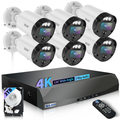
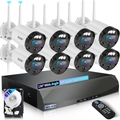
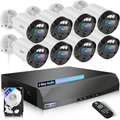
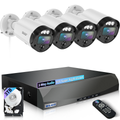
In a PoE system, cameras send video to the NVR while receiving power through the same Ethernet cable. Some NVRs come with built-in PoE switches, allowing plug-and-play installation. For example, a 4-channel NVR with a PoE switch can connect up to four cameras immediately. Larger systems (8, 16, 32 channels) allow flexible expansion, making it ideal for commercial spaces, campuses, or large homes.
PoE systems can also be networked for distributed installations, where an external PoE switch connects multiple cameras back to a central NVR. This ensures reliable video transmission, minimal downtime, and centralized management.
Benefits of PoE Security Cameras
-
Simplified Installation – One cable provides both power and data, reducing setup time.
-
Consistent Power – Cameras remain operational even if WiFi or external adapters fail.
-
High-Definition Video – Supports 1080p, 4K, or higher resolutions for clear footage.
-
Scalability – Easily add cameras without reconfiguring the entire system.
-
Reduced Maintenance – Fewer cables and power sources mean fewer points of failure.
- Integration with Advanced Features – Cameras can include motion detection, AI analytics, and remote monitoring.
WEILAILIFE PoE cameras combine these advantages, making them ideal for both residential and commercial security solutions.
Optimizing Your PoE Camera Network
To maximize performance:
- Use Cat6 Ethernet cables for better bandwidth and longer runs.
- Employ PoE switches with surge protection to safeguard against electrical issues.
- Position cameras strategically to cover entrances, high-traffic areas, and blind spots.
- Pair cameras with a WEILAILIFE NVR for reliable storage, playback, and remote access.
- Keep firmware updated to ensure the latest features and security patches are applied.
These steps ensure consistent high-definition video, minimal downtime, and reliable intrusion detection.
Why Choose WEILAILIFE PoE Cameras
WEILAILIFE provides professional-grade PoE cameras that balance convenience, performance, and scalability. Benefits include:
- Plug-and-play installation for rapid deployment
- 4K and 1080p high-resolution options for crystal-clear monitoring
- Scalable networked systems suitable for multi-building setups
- Advanced features like motion detection, AI analysis, and remote access
- Durable, weather-resistant designs for indoor and outdoor use
With WEILAILIFE, you’re not just buying cameras—you’re investing in a comprehensive surveillance solution that grows with your needs.
Conclusion
For any property requiring reliable surveillance, PoE security cameras are an excellent investment. They provide high-definition video, reliable power, easy installation, and scalable networking, making them superior to traditional analog or wireless cameras.
Choosing WEILAILIFE ensures professional installation, advanced features, and long-term support. From small businesses to large commercial properties, WEILAILIFE PoE camera systems offer peace of mind and enhanced security.
Contact WEILAILIFE today for a free consultation and design a tailored security solution that protects your home or business effectively.