


Cold Storage Warehouse Security: What Nobody Tells You About Cameras in Freezer Environments
If you've ever managed a cold storage facility, you already know it's a completely different animal than a regular warehouse. Regular warehouses? You slap up some cameras, plug them in, and forget about them. Cold storage? Every single step—from selection and installation to daily maintenance—comes with its own set of headaches.
Last year, I toured a frozen food distribution center with a buddy who runs the operation. Inside the -18°C freezer, the security camera mounted above the door was completely useless—just a white foggy mess. He'd installed it three months earlier, bought the cheapest thing he could find, and now he was looking at shutting down the bay, warming it up, and re-running conduit just to swap it out. Total nightmare.
And his story isn't rare.
The Three Silent Killers of Cold Storage Surveillance
Cold storage kills cameras in ways most people don't think about until it's too late. Three main issues:
First: Frost and fogging. Every time that freezer door opens, warm humid air rushes in and hits the cold camera lens. Instant condensation. That condensation freezes, and suddenly your 4K camera is showing you nothing but a white wall. Standard cameras without heated lenses fog up within minutes in a -25°C environment.
Second: The cold literally breaks electronics. Most off-the-shelf security cameras are rated for 0°C to 40°C. Stick one in a sub-zero freezer, and the circuit boards frost up, sensor sensitivity drops through the floor, capacitors start failing. At -20°C, the equivalent series resistance on cheap electrolytic capacitors can increase tenfold—your camera won't even boot up.
Third: Cable jackets turn brittle. Standard PVC cabling starts stiffening at -15°C and cracks at -30°C. Once that jacket splits, moisture gets in, and you've got a short circuit waiting to happen. Good luck tracing that fault through 200 feet of overhead conduit.
So How Do You Actually Set Up Cold Storage Surveillance?
Cold chain security boils down to two things: seeing clearly and storing reliably.
Hardware selection: Low-temp rating is non-negotiable. Your cameras need to handle freezing temperatures, period. Professional cold storage cameras are rated down to -30°C or even -40°C. And they absolutely need window heating—built-in heating elements keep the lens surface above the dew point so condensation doesn't form in the first place.
Placement: Avoid air outlets and doors. Don't point a camera straight at a freezer fan discharge—that's -30°C air blasting directly onto the lens. You'll have ice buildup in minutes. Keep cameras at least 10 feet away from freezer doors to minimize the warm-air blast every time someone walks in and out.
Power and storage: Redundancy is your friend. Cold storage power outages are more common than you'd think, and if the monitoring goes down along with the refrigeration, you're looking at potential cargo claims worth hundreds of thousands. Dual power feeds and a good UPS should be mandatory. Storage drives matter too—standard hard drives can stutter and drop frames in freezing temps, and you won't know until you need that footage.
Where WEILAILIFE Fits Into the Cold Storage Picture
Now let's talk hardware.
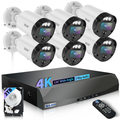
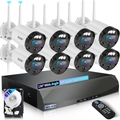
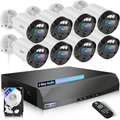
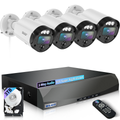
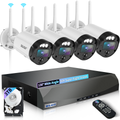
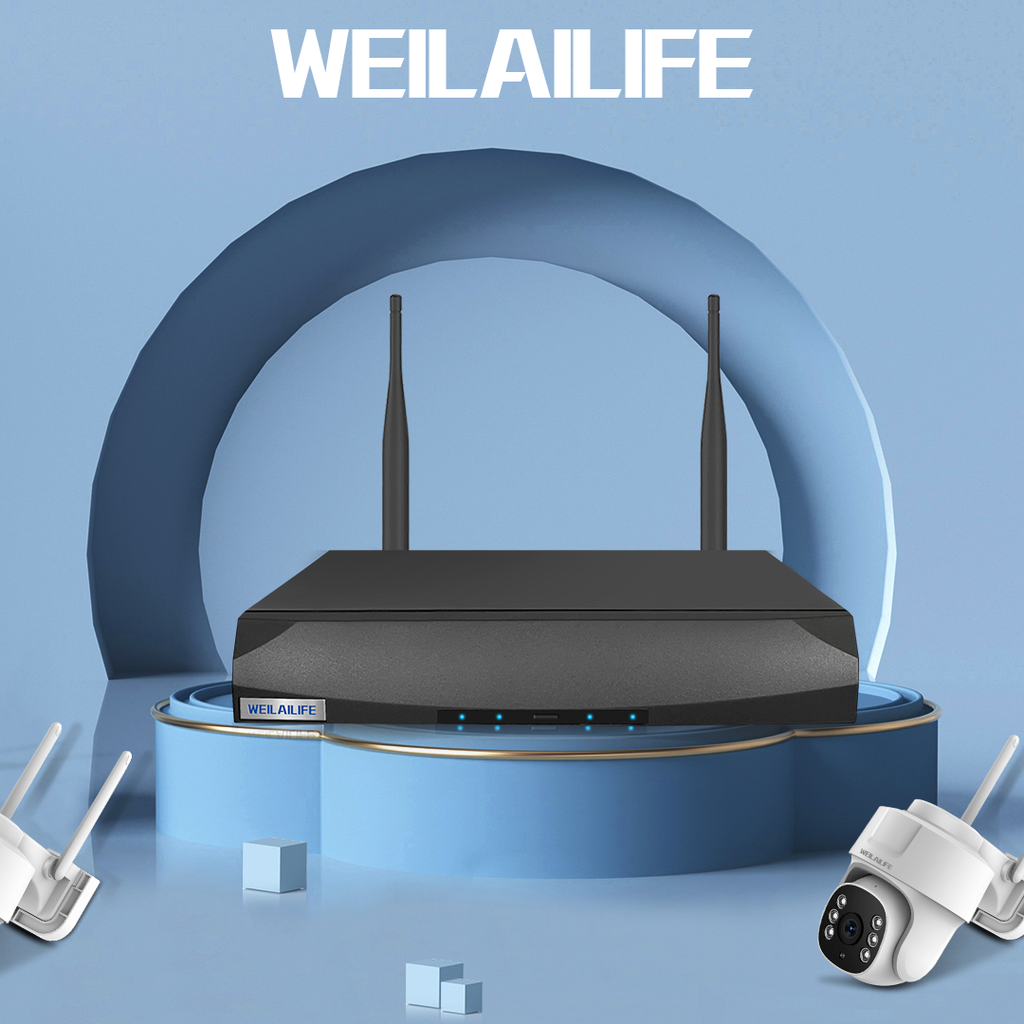
The WEILAILIFE 8MP 4Cam system wasn't marketed specifically as a "cold chain camera," but the specs put it in the game for most freezer applications:
IP66 weatherproof rating. Cold storage is a wet environment—condensation, floor washing, defrost cycles, you name it. IP66 means these cameras can handle high-pressure water jets without breaking a sweat. Humidity doesn't phase them.
Infrared night vision and auto IR-Cut. Freezers are notoriously dim. Lights burn out and don't get replaced for days. This system gives you 65 feet of night vision with an automatic IR filter that switches day/night seamlessly. You're never in the dark.
3TB local storage with 90 days of continuous recording. Cold chain inventory turns slower than regular warehouse stock, and you've got temperature log requirements on top of everything else. Most cold storage operators need at least 30 days of footage—pharma cold chain often requires 180. Our built-in 3TB drive with H.265+ compression gets you roughly 90 days, which covers the vast majority of commercial cold storage needs.
130° ultra-wide lens. Freezers are packed tight with racking, and you can't just drill holes everywhere—every penetration in the insulation envelope is a potential cold bridge that wastes energy and causes condensation. Wide-angle coverage means fewer cameras, fewer holes, less damage to your thermal barrier.
Dual power mode. Running cable through freezer walls is the worst part of any cold storage install. You're dealing with vapor barriers, insulation thickness, and the constant risk of creating a cold bridge. WEILAILIFE's dual power option lets you push cameras beyond the standard 60-meter PoE limit using local power—up to 200 meters—which means less conduit, fewer wall penetrations, and a cleaner install.
No monthly fees, free remote viewing via HonestView App. Cold storage facilities often have owners, operations teams, and quality control people spread across different locations. The HonestView app—free on iOS and Android—lets everyone check live feeds remotely without paying a dime in subscription fees. That's what we mean by a real home security camera system no subscription—except this one works in a freezer.
Practical Advice From Someone Who's Been There
If you're speccing out surveillance for a cold storage warehouse, here's the short list:
-
Don't cheap out on the cameras. Get models with heated windows. A clear lens is worth more than 8K resolution on a fogged-up screen.
-
Watch your placement. Stay clear of fan discharge zones and keep a solid 10-foot buffer from freezer doors.
-
Use cold-rated cabling. Skip the standard PVC and go with low-temperature-rated jackets. Run conduit in metal or heavy-duty PVC, and terminate all connections outside the cold zone.
-
Throw a UPS on the whole system. Power flickers happen. Freezer downtime isn't just an inconvenience—it's a product loss event.
-
Store at least 30 days of footage. Cold chain disputes don't show up the next day. They show up three weeks later when a customer rejects a shipment for temperature deviation. If your footage is gone, so is your defense.
Every pallet in that freezer represents real money. Getting your camera system right isn't a luxury—it's a cost of doing business.
WEILAILIFE 8MP 4Cam PoE Dome Security Camera System brings together IP66 weatherproofing, 65-foot IR night vision, 3TB local storage with 90-day retention, a 130° wide-angle lens, dual power for flexible deployment, and free remote access through the HonestView app. Zero monthly fees. A true warehouse security camera solution that holds its own in freezing conditions.
Need a custom quote for your specific cold storage layout? Reach out—we've helped outfits from small cold rooms to massive distribution centers figure out what actually works.