





What Keeps RV Owners Up at Night? A Security Camera Can Handle It All
For most RV enthusiasts, there is always a lingering sense of unease when spending the night in an unfamiliar location. Whether parked in a national park campground or at a remote roadside overlook, the moment darkness falls and you retreat inside, your ears naturally perk up at every outside sound. Is that a branch scraping against the side of the vehicle? Or is something moving near the hood? At times like this, do you pull back the curtain to check, or do you try to ignore it?
Many experienced RV owners would choose to check their phone instead. Not out of fear, but because they understand that a home security camera system installed on the vehicle serves one essential purpose: turning the unknown into the known. The greatest source of anxiety is not danger itself, but the uncertainty of whether danger exists at all. A reliable camera addresses precisely that blind spot.
Installation Feasibility Comes Before Specifications
When newcomers to the RV lifestyle ask which camera offers the best image quality or the longest night vision range, the first question they should be asked is: how do you plan to mount it?
An RV is not a traditional building with flat, sturdy walls. The roof is curved, the rear section is sloped, and the sides are occupied by awnings, windows, and hatches. If you purchase a system that requires expansion bolts, visible wiring, or voltage converters, chances are high that it will end up collecting dust in a storage compartment — not because it performs poorly, but because the installation process is simply too daunting.
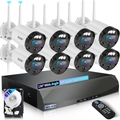
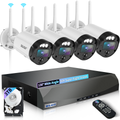
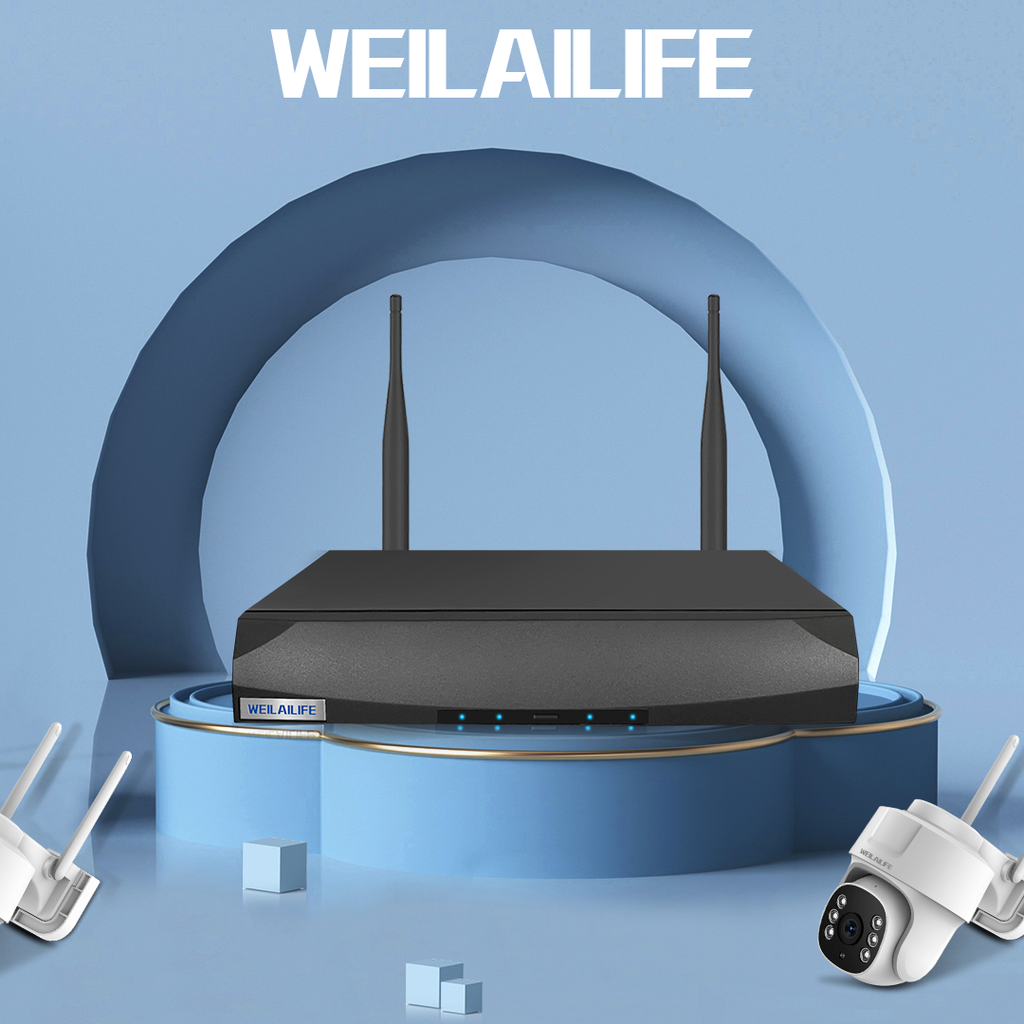
This is where how to set up wireless security camera system becomes a critical consideration. In the RV context, the answer boils down to a single principle: adhesion over drilling. Take the WEILAILIFE setup as an example. The rear camera attaches directly to the spare tire mount via a clamp. The roof-mounted unit uses a strong magnetic base. The interior camera, which monitors the cabin, adheres to the black dotted area above the windshield — no cables are required, and a full charge lasts nearly two weeks. The entire installation process can be completed without picking up a screwdriver. This approach lowers the barrier to entry, encouraging owners to actually use the system rather than abandoning it due to installation complexity.
Network Reliability Is Non-Negotiable
One particularly frustrating experience occurred at a campground near Grand Teton National Park. The phone displayed two signal bars, but the actual data speed was so slow that even text messages could barely go through. The Wi-Fi-only camera installed at the time lost connection entirely, leaving the owner unable to monitor the vehicle from several miles away in Jackson Hole. That sense of detachment was deeply unsettling.
This incident reinforced a firm conviction: an RV security camera must have cellular backup. The 4G version of WEILAILIFE's camera accepts a standard data SIM card, effectively functioning as its own portable hotspot. Even if the campground Wi-Fi fails or no router is nearby, the camera can still transmit video feeds through the carrier's network. Concerns about data usage are largely unfounded — the system only uploads short clips triggered by motion events, consuming less than 1 GB per month. The cost is minimal compared to the peace of mind it provides.
Intelligent Alerts Reduce False Positives
There was a period when notification fatigue became a serious issue. Over forty motion alerts would arrive in a single day, the vast majority triggered by moths, raindrops, or headlights sweeping across from distant highways. On one particularly amusing occasion, a large leaf stuck to the lens and fluttered back and forth in the wind, generating over twenty notifications within an hour.
This is why human shape recognition has become a highly valued feature. Not all movement warrants attention — only the approach of a person justifies an immediate alert. WEILAILIFE's system distinguishes between a passing vehicle and an individual walking up to the RV. The former is recorded silently without disruption; the latter triggers a mobile notification. This measured approach prevents alert fatigue, ensuring that users do not end up disabling notifications altogether.
Infrared Night Vision Offers Greater Practicality
While some manufacturers promote color night vision as a premium feature, infrared black-and-white imaging often proves more practical for RV applications. Color night vision typically requires supplemental white LED illumination, which lights up the immediate foreground but sacrifices visibility at longer distances. In contrast, infrared operates silently and captures clear outlines of objects and individuals up to several dozen meters away.
On one occasion while camping in a remote area of Utah, the infrared feed clearly showed a figure emerging from a thicket approximately fifty meters away at two in the morning. The individual approached to within about fifteen meters of the vehicle, paused briefly, and then turned back. The identity and intention remain unknown, but the ability to observe the entire sequence in real time prevented unnecessary panic. The clarity of the situation allowed for a calm assessment — far preferable to waking up disoriented with no visual reference.
Two-Way Audio Serves a Practical Purpose
The two-way talk function on a security camera may initially seem superfluous, but real-world use reveals its value. On one occasion, a cyclist stopped beside the RV and began examining the propane tank mounting bracket with apparent curiosity. Rather than triggering a siren or alarm, simply pressing the talk button and saying, "Hey there, it's securely fastened," startled the individual, who then gave a thumbs-up and left without incident.
In many situations, a calm verbal acknowledgment is more effective than a loud alarm. It communicates that the area is being monitored without escalating tension. This subtle form of deterrence is an understated yet valuable feature of a modern camera system.
Redundant Storage Provides Peace of Mind
A balanced approach to video storage incorporates both cloud and local options. When network connectivity is available, motion-triggered clips are automatically uploaded to the cloud, ensuring that evidence remains intact even if the on-device memory card is removed or damaged. In areas without signal, recordings are saved locally to a microSD card. Even after a week in a remote area, the footage remains accessible for review upon return.
A 64 GB card configured for loop recording, combined with a basic cloud storage plan for alert clips, offers a cost-effective and robust storage solution. This dual-layer strategy covers both connectivity-rich and offline scenarios without incurring excessive data costs.
Solar Power Eliminates Battery Anxiety
Concerns about power consumption are common among RV owners, but modern low-power camera designs have largely mitigated this issue. The WEILAILIFE rear camera, for instance, connects to a compact solar panel that can be placed on the rear window facing southward. During daylight hours, it provides sufficient charge to sustain the camera's operations through the night. The overall energy draw is minimal — significantly less than the vehicle's refrigerator compressor.
The notion that a security camera will drain the RV's electrical system is largely outdated. With solar supplementation, power supply becomes a non-issue for most camping scenarios.
Ultimately, the purpose of installing a security camera is not to foster hypervigilance or compulsive screen-checking. It is to enable the simple act of drawing the curtains, turning off the overhead lights, and lying down to sleep with genuine confidence. Knowing that the phone will notify you if something significant occurs — and equally important, knowing that trivial disturbances will not — allows you to focus your attention on the journey itself, rather than on latent anxieties. This is the true value that a well-chosen home security camera system brings to the RV lifestyle. And after all, isn't that precisely why we chose to travel this way in the first place?