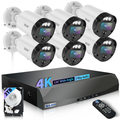
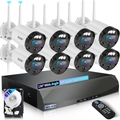
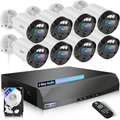
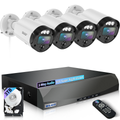
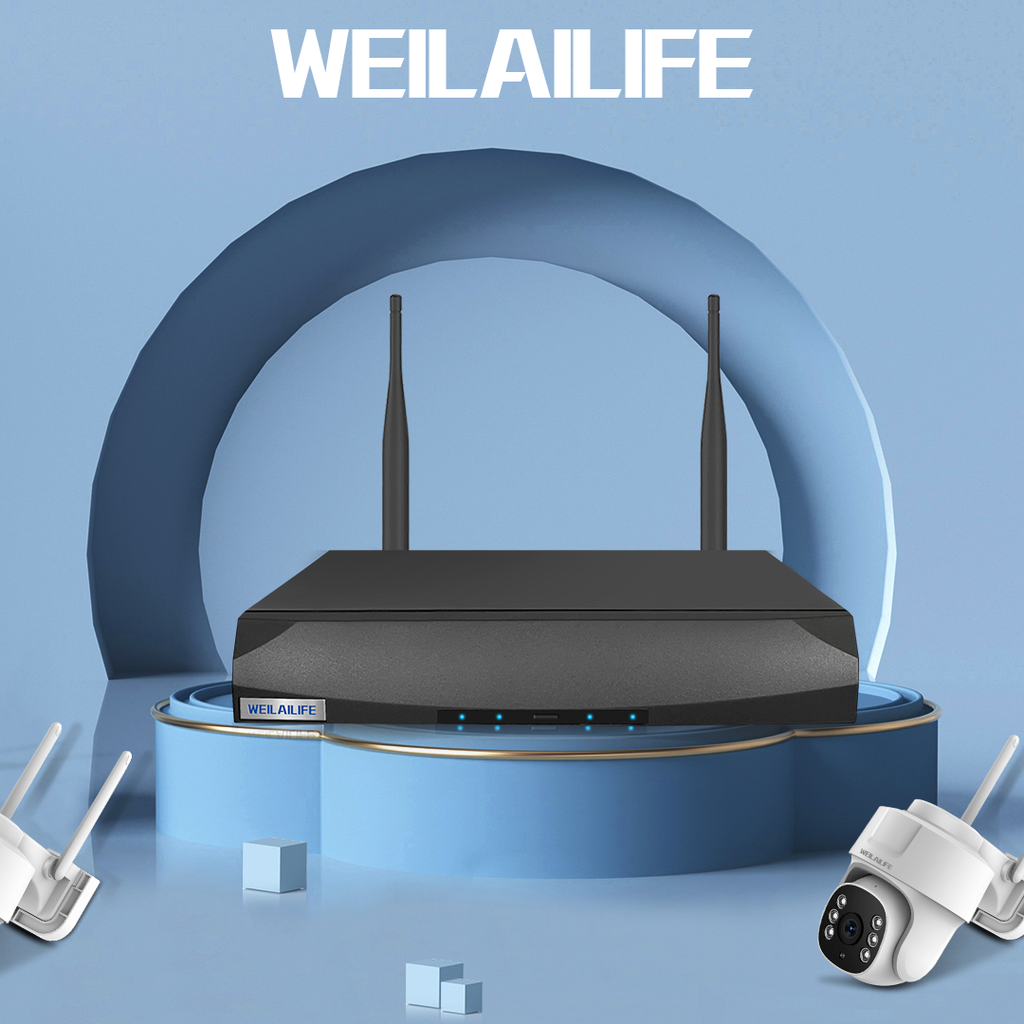
When selecting a home surveillance system, many consumers encounter the acronyms DVR and NVR without a clear understanding of their functional distinctions. Although both devices serve the primary purpose of recording video, they operate on fundamentally different architectures and are suited to different use cases. This article provides a systematic comparison of the two technologies and offers product recommendations from WEILAILIFE to assist in the decision-making process.
🔍 Fundamental Differences Between DVR and NVR
A concise way to conceptualize the distinction is as follows: DVR is designed for traditional analog cameras, whereas NVR is built for modern IP (network) cameras.
-
DVR (Digital Video Recorder) : This device interfaces with analog cameras via coaxial cables. The analog signal received by the DVR must undergo digitization and compression before being written to the internal hard drive. Each camera requires a dedicated cable run back to the recorder, which can complicate installation. However, this configuration ensures stable signal transmission that is unaffected by network fluctuations.
-
NVR (Network Video Recorder) : This device works with IP cameras, which output pre-compressed digital video streams over standard Ethernet cables. Many IP cameras support Power over Ethernet (PoE) , enabling both data transmission and electrical power through a single cable. The NVR functions primarily as a centralized data repository, receiving, managing, and storing video streams without performing additional signal conversion. Because the system is fully IP-based, cameras can be deployed at any location reachable via the network, offering substantial deployment flexibility.
In essence, DVR constitutes a closed, cable-dependent architecture, while NVR represents an open, network-based infrastructure. This architectural distinction underpins all subsequent differences in performance, installation, and scalability.
⚖️ Comparative Advantages and Target Use Cases
🛡️ DVR Systems – The Cost-Effective, Reliable Solution
Advantages:
-
High cost-effectiveness: Mature technology with lower initial investment requirements, suitable for budget-constrained residential and small retail applications.
-
Signal stability: Coaxial cable transmission is immune to Wi-Fi interference and network congestion, ensuring consistent video streams.
-
Suited for fixed configurations: For installations with predetermined camera counts and no anticipated expansion, DVR provides adequate functionality without unnecessary complexity.
Limitations:
-
Constrained image quality: Although advanced DVR models support higher resolutions, analog cameras generally cannot match the detail and clarity delivered by modern IP cameras.
-
Installation complexity: Each camera necessitates separate coaxial and power cabling, increasing labor and material costs.
-
Scalability constraints: DVRs have fixed channel capacities; once all channels are occupied (e.g., 8 channels), adding additional cameras requires replacing the recorder itself.
Recommended for: Small retail stores, rental properties, and residential installations with 2–8 cameras, short cable runs, limited budgets, and no future expansion requirements.
🌐 NVR Systems – The High-Definition, Intelligent Solution
Advantages:
-
Superior image quality: Supports resolutions up to 4K and beyond, enabling detailed facial recognition and license plate identification.
-
Simplified installation: PoE functionality consolidates data and power transmission into a single Ethernet cable, substantially reducing installation effort.
-
Flexible scalability: Additional IP cameras can be integrated simply by connecting them to the network, without being constrained by recorder channel limits.
-
Comprehensive remote access: Network-based architecture facilitates convenient remote viewing via mobile applications and web interfaces, accessible from any location.
Limitations:
-
Network dependency: Insufficient bandwidth or unstable network conditions may result in latency or performance degradation.
-
Higher upfront expenditure: The combined cost of NVR units and IP cameras typically exceeds that of comparable DVR-based systems.
Recommended for: Residential properties, offices, and commercial spaces prioritizing image quality, remote accessibility, and system expandability.
🛒 Product Recommendations from WEILAILIFE
WEILAILIFE has established a reputation for delivering high-value security solutions, maintaining an average user rating of 4.3 out of 5 stars. The brand emphasizes straightforward installation and practical functionality, with device configuration guided through an intuitive mobile application that requires no specialized networking expertise. WEILAILIFE systems operate on a no-monthly-fee, local storage model, making them particularly attractive for DIY-oriented users.
The following table summarizes the key specifications of two representative products:
💎 Selection Criteria and Final Recommendations
To summarize the comparative analysis:
-
DVR represents the established, cost-conscious option—stable, affordable, and low-maintenance. It is particularly suitable for installations with fixed camera positions, limited budgets, and minimal technical requirements.
-
NVR represents the advanced, future-ready option—delivering superior image quality, greater installation convenience, and enhanced scalability. It is better aligned with the evolving demands of modern surveillance applications.
🎯 Concluding Recommendations:
For users with constrained budgets, existing coaxial cabling, and no anticipated system expansion—the WEILAILIFE 4MP 8-Channel DVR System is recommended. This solution offers proven reliability and cost-effectiveness for fundamental recording requirements.
For users prioritizing 4K image clarity, convenient remote accessibility, and future expansion capabilities—the WEILAILIFE 8MP 4-Channel NVR System is advised. This investment provides longer-term value and superior performance, particularly when fine visual details are critical.
For those still deliberating, the following general principle may serve as a useful guideline: For new installations or complete rewiring projects, prioritizing NVR is advisable; for system upgrades where existing cabling infrastructure can be retained, DVR remains a viable choice. In either scenario, WEILAILIFE offers dependable products that deliver competitive value—enabling informed purchasing decisions based on individual requirements.