


The Ultimate Guide to Home Security Camera Installation: Key Locations and Best Practices
When it comes to installing home security cameras, placement often matters more than the camera itself—no matter how advanced your camera is, if it's in the wrong spot, its effectiveness drops significantly. Poor positioning can result in blurry footage, missed activity, or constant false triggers from trees and headlights, eventually causing you to ignore real alerts.
This guide covers the most critical outdoor security camera locations, installation best practices, and system selection tips to help you build a truly effective security network.
Six Key Installation Locations
1. Front Door Entrance
The front door is the most common entry point for burglars—statistics show that about 34% of break-ins occur through the front door. It's also a hotspot for package theft. Installing a camera here helps you monitor visitors, track package deliveries, and even communicate remotely with people at your door using two-way audio.
Installation Tips:
-
Mount above or beside the door, angling the lens downward for clear facial capture
-
Choose a model with infrared night vision for 24/7 coverage
-
Install out of arm's reach to prevent tampering
2. Back and Side Doors
Approximately 22% of burglaries occur through back doors. These entrances are less visible from the street and offer more privacy, making them a favorite for intruders looking for a discreet entry point. Many homeowners overlook these areas, leaving a significant security gap.
Installation Tips:
-
Mount at 8-10 feet high—enough to capture clear details while staying out of reach
-
Choose a camera with a wider field of view to cover the door frame and several feet beyond
-
Prioritize weatherproof models rated for outdoor use
3. Garage and Driveway
Garages are high-value targets—they typically house vehicles, tools, bicycles, and sometimes provide direct access to the main house. Driveways are also high-traffic areas for package deliveries and suspicious vehicle activity. For detached garages, cameras can help maintain a visual connection to the main property.
Installation Tips:
-
Position cameras to clearly capture the garage door, driveway entrance, and walkways leading to the house
-
Enable motion detection notifications so you're alerted immediately to any unusual activity
-
Wide-angle cameras are ideal for covering large driveways or multi-car garages
4. Yard and Property Perimeter
The yard and perimeter are the first areas an intruder steps foot on. Installing cameras at the corners of your home provides the widest coverage, allowing you to monitor any approach path to your property.
Installation Tips:
-
Mount on exterior corners for maximum field of view covering the yard and all access routes
-
Avoid obstructions like trees or landscaping, and consider anti-tamper designs
-
Prioritize models with excellent night vision to capture clear footage in low-light conditions
5. Backyard and Outbuildings
From tool sheds and detached garages to swimming pools and children's play areas, backyards often hold valuable items and are typically hidden from street view.
Installation Tips:
-
Install near entry gates, garden sheds, or along fence lines
-
For best nighttime performance, pair with motion-activated outdoor lighting
-
Must use weatherproof, vandal-resistant outdoor-rated cameras
6. Porch and Package Delivery Area
With the rise of online shopping, "porch piracy" has become increasingly common—packages are stolen shortly after delivery. A camera in this location helps prevent package theft and records who approaches your front door.
Installation Tips:
-
Choose a model with high frame rate and sharp image quality for clear facial and license plate recognition
-
A video doorbell with two-way audio is a great option, allowing you to speak with visitors even when you're away
-
Enable push notifications so you're instantly alerted to activity
Why Choose a Wired PoE System
Many shoppers focus solely on resolution when buying cameras, overlooking what actually impacts day-to-day usability the most: connectivity and storage.
-
Connection Stability: Wired systems transmit video via physical cables, completely independent of Wi-Fi signal strength—no dropouts, lag, or disconnections. This is essential for 24/7 continuous recording.
-
Simplified Power Delivery: PoE (Power over Ethernet) technology delivers both power and video data through a single Ethernet cable, eliminating the need for separate power outlets near each camera.
-
Local Storage, No Monthly Fees: Footage saves directly to the NVR's built-in hard drive—no cloud dependency, no recurring subscription fees. This is exactly why more homeowners are choosing a home security camera system no subscription.
Installation Best Practices
Mounting Height and Angle
The recommended height is 8 to 10 feet—enough to capture clear details while staying out of reach from most people. Avoid pointing the lens directly at the sun or bright light sources, which can cause glare and overexposed footage.
Avoid Blind Spots and Interference
-
Don't install too close to tree branches or shrubs—they'll eventually grow and block the lens
-
Choose a camera with weather resistance ratings suitable for your local climate
-
Mount under eaves or in partially sheltered locations to extend equipment lifespan
Choose Wide-Angle Lenses
A wider field of view means fewer blind spots. For open areas like yards and driveways, consider cameras with 130° or wider angles to cover more space with fewer devices.
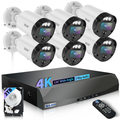
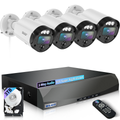
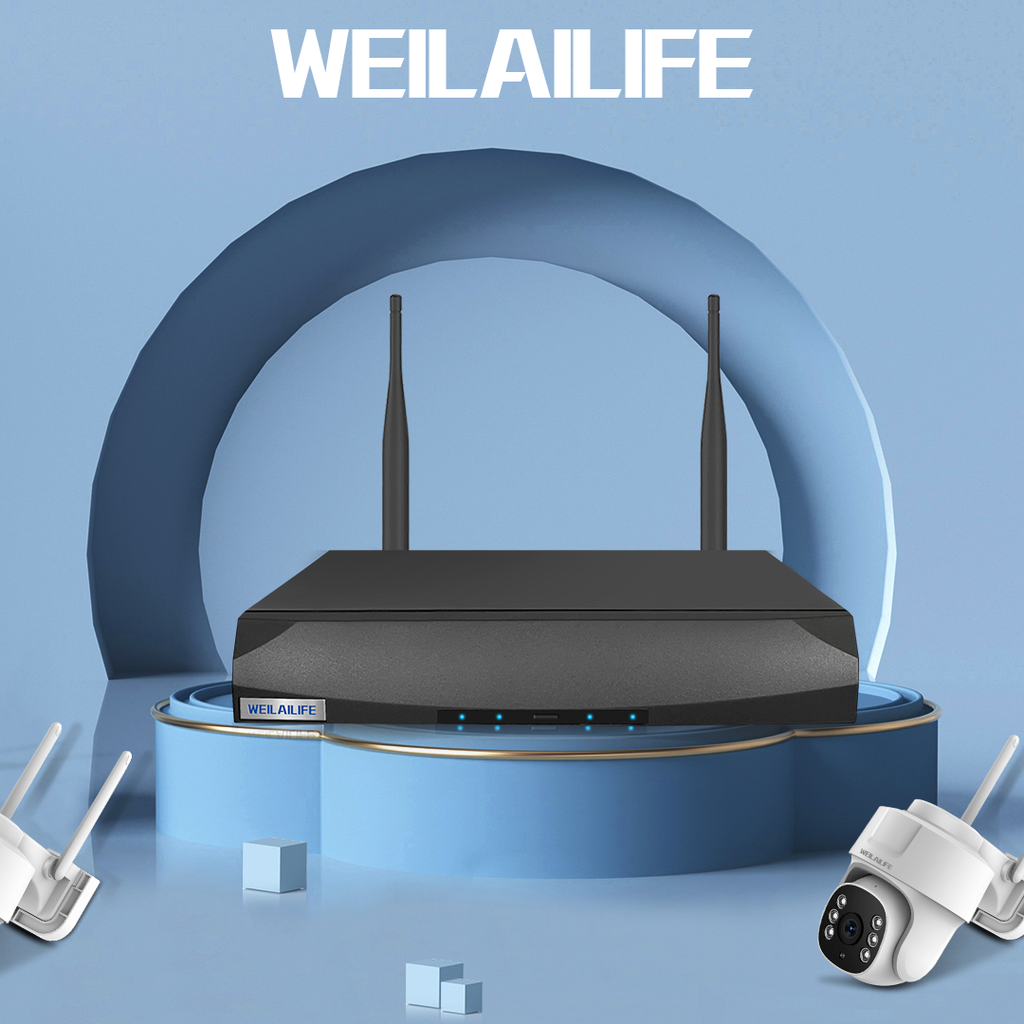
Recommended Solution: WEILAILIFE 8MP 4Cam Wired Security System
If you're looking for the best outdoor security camera for home and want to ditch monthly fees while enjoying reliable wired performance, the WEILAILIFE 8MP 4Cam is a system worth serious consideration.
-
4K Ultra HD Resolution: 8MP clarity captures details sharp enough to identify license plates and facial features
-
10.1-Inch IPS Display: The NVR comes with a built-in 1080p Full HD screen—plug and play, no external monitor needed
-
130° Ultra-Wide-Angle Lens: Significantly reduces blind spots, ideal for garages, yards, and open spaces
-
PoE Power, Simple Setup: One Ethernet cable handles both power and data—no power outlets needed near each camera
-
Local Storage, No Monthly Fees: Recordings save to the local hard drive, accessible remotely via the free "HonestView" app—no hidden costs
-
Two-Way Audio: Built-in noise-canceling microphone and speaker let you talk to family or visitors remotely
-
Dual Power Mode: Standard PoE runs up to 60 meters; for detached garages or outbuildings, use a local power adapter to extend range beyond 200 meters (660 feet)
Conclusion
An effective home security system isn't about stacking up as many cameras as possible—it's about putting the right camera in the right place. The front door, back doors, garage, yard, backyard, and porch cover the vast majority of intrusion paths. Combined with a stable, reliable wired PoE system, you get crystal-clear footage while eliminating recurring subscription fees once and for all.
Choose a system like the WEILAILIFE 8MP 4Cam to cover every critical location properly—and you'll walk away with more than just a set of cameras. You'll get genuine peace of mind.