


Wireless Security Cameras Without Wi-Fi: Do They Actually Work?
Most of us assume security cameras need Wi-Fi to do their job. You plug them in, connect them to your home network, and watch the feed from your phone. That’s the standard picture.
But what if you don’t have Wi-Fi? What if you’re setting up surveillance in a barn, a newly built house, or a workshop at the back of your property where the signal doesn’t reach?
The short answer: yes, wireless cameras absolutely work without Wi-Fi. They just work differently.
Here’s what you actually need to know.
The Three Ways Offline Cameras Operate
Not all "wireless" cameras are the same. When people say wireless, they usually mean Wi-Fi-enabled. But some cameras are wireless in a different sense—they run on batteries and don't connect to anything except a local recorder.
Let’s go through the three main options.
1. Local Storage – The Simplest Route
This is the most common setup for people who just want one or two cameras.
The camera records motion-triggered footage onto a microSD card inside the device. No internet required. No cloud account needed. When you want to check what happened overnight, you either pull the card out or connect to the camera directly via its local IP address.
The downside? Storage space is limited. Even with a 256GB card, you’re only getting a few days of recordings. And if someone steals the camera itself, they take the footage with it.
Who it's for: renters, single-room monitoring, temporary setups, or anyone who wants a cheap and quick solution.
2. NVR Systems – Real Surveillance, No Cloud Involved
This is the route most homeowners eventually take.
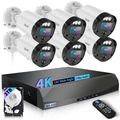
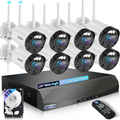
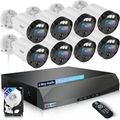
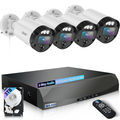
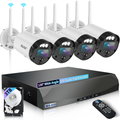
An NVR (Network Video Recorder) sits somewhere in your house—closet, basement, office—and connects to all your cameras through cables or Wi-Fi. Every camera sends its video feed directly to the NVR, which saves everything onto a hard drive.
What makes this setup different: the cameras and the NVR communicate on a private local network. They don't need the public internet to function. Recording keeps happening even if your ISP goes down for three days. All footage stays inside your house, on your own hard drive, not in someone's data center.
If you're building out a home security camera system, this is the most reliable approach. You get higher resolution, longer storage, and you're not paying monthly cloud fees.
DVR vs. NVR – Which One Fits Your Setup?
You’ve probably seen both terms and wondered if they matter.
Here's a quick way to separate them:
-
DVR works with analog cameras. Video quality tops out around 1080p. Cable runs are limited.
-
NVR works with IP cameras. Sharper image, smarter features (like motion zones), and longer cable runs.
If you're buying cameras today, you're likely buying IP cameras. Which means you don't need a DVR—you need an NVR.
So next time someone asks "do I need a DVR for security cameras?" —the answer really depends on the camera type. For a modern system, skip the DVR and go NVR.
When Wi-Fi Isn't an Option at All
Some locations simply don't have internet. Farms. Construction sites. Off-grid cabins. Remote gate entrances.
For these spots, you need a security camera that works without wifi from the ground up.
That's where 4G LTE cameras come in. They take a SIM card, just like your phone, and send video and alerts over cellular data. Combine that with a solar panel and a rechargeable battery, and you have a fully independent camera that runs for months with zero infrastructure.
You won't get ultra-high resolution on a 4G connection—bandwidth limits are real—but you will get reliable alerts and usable video when something happens.
One More Thing: Privacy and Control
There's an angle to this that doesn't get talked about enough.
When your footage is stored locally—on an SD card or an NVR—it never leaves your property. That means you're the only person who can access it. No corporate servers. No data mining. No uncertainty about who else might be watching.
For some people, that's the main reason they choose an offline system. It's not just about lack of internet. It's about who gets to see what happens on their property.
What WEILAILIFE Offers for Offline Setups
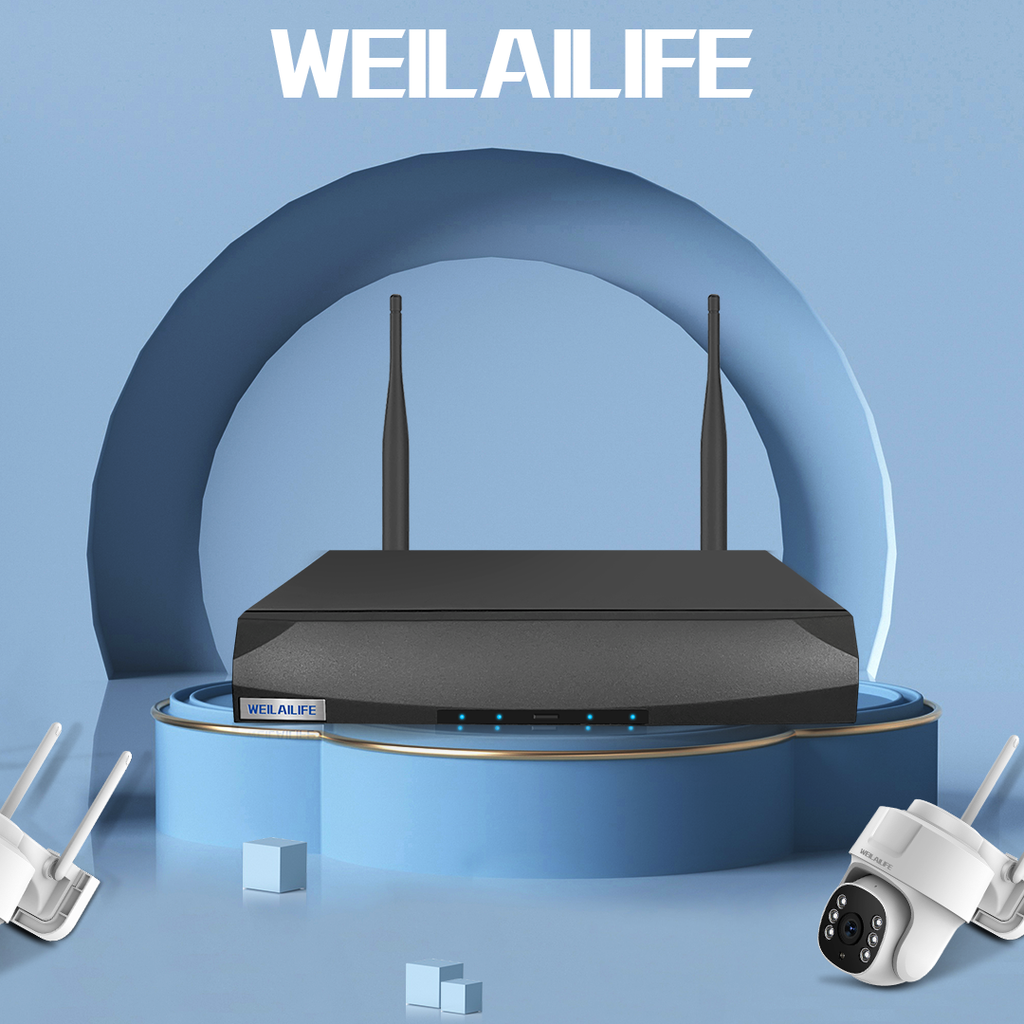
Across the board, WEILAILIFE focuses on local-first surveillance. Their NVR-based systems are designed for homeowners who want reliable 24/7 recording without subscription fees. Cameras integrate with the recorder seamlessly, and setup is straightforward—you're not wrestling with port forwarding or cloud account registrations.
More importantly, their systems keep everything local. Footage stays on the hard drive you own. Connectivity issues don't break your security. And if you ever want remote access, you can choose to enable it—but you're never forced to depend on it.
Final Takeaway
Here's the bottom line: you don't need Wi-Fi for security. What you need is a clear decision about how much coverage you want and where you want your footage to go.
-
Single spot, low budget: SD card camera.
-
Whole house, multiple cameras: NVR system.
-
No internet, no power: 4G solar camera.
Pick your situation, match it to the solution, and stop worrying about whether your Wi-Fi is up.